

Some trips feel less like “sightseeing” and more like stepping into a time machine.
Ajanta & Ellora is exactly that kind of journey.
One day you’re in noisy, traffic-filled Aurangabad. A couple of hours later, you’re standing in front of 2,000-year-old paintings, trying to imagine monks quietly meditating where school kids now shout for selfies. The rock is the same, the silence between those chants is the same — only the centuries have changed. And that’s exactly why a good Ajanta and Ellora Caves travel guide helps you understand how special this place really is.
If you’ve grown up reading about Ajanta & Ellora Caves in school books, this is your chance to finally walk inside those textbook photos and see how massive, detailed and alive they actually are.
This Ajanta and Ellora Caves travel guide helps you choose the best caves to see on Day 1 and Day 2.
Places to Visit (What to See in Ajanta & Ellora)
Day 1 – Ajanta Caves: Stories Painted on Stone
Ajanta Caves overview
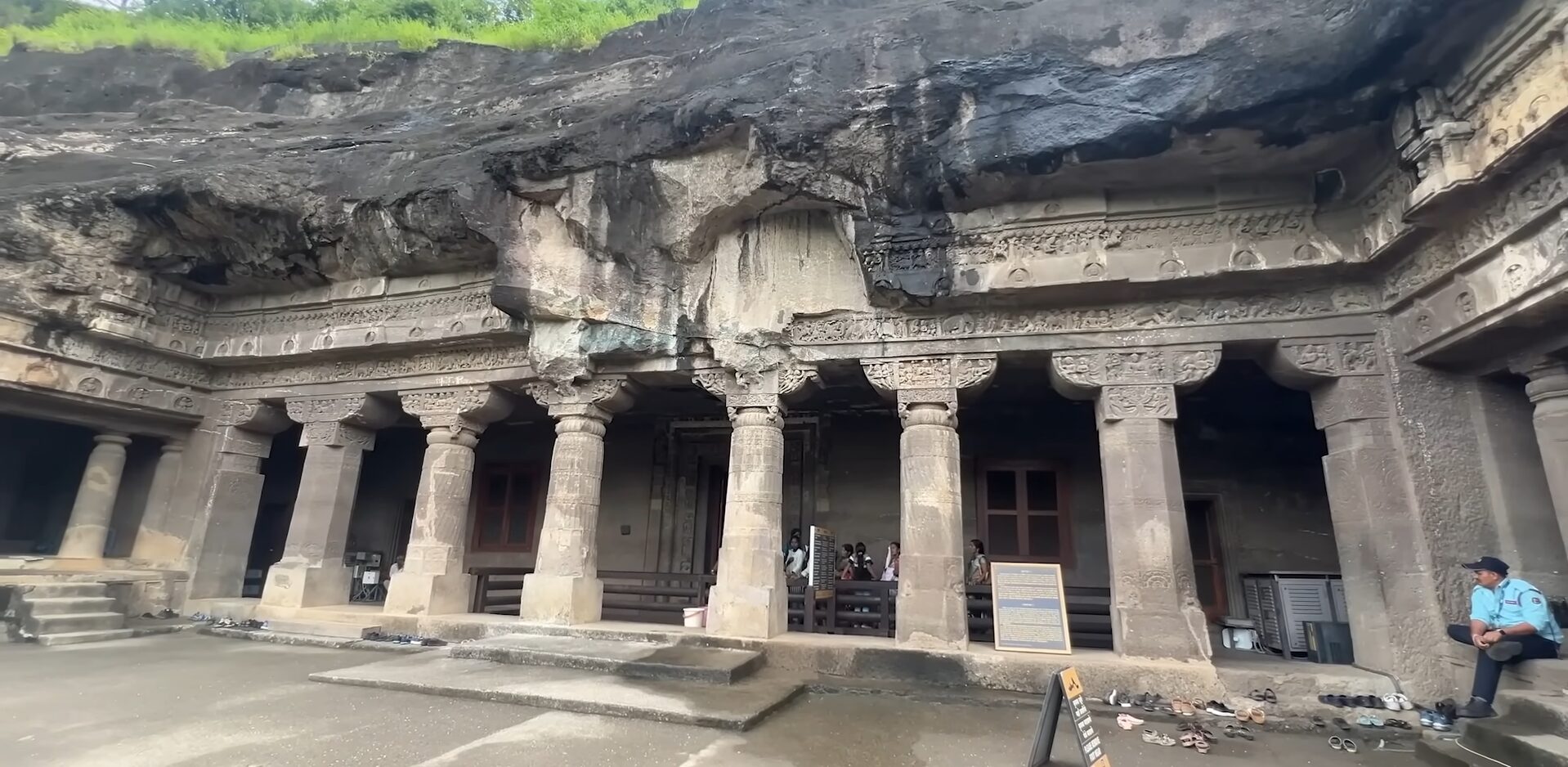
Ajanta lies in a horseshoe-shaped bend of the Waghora River valley, about 100 km from Aurangabad. The caves were carved between the 2nd century BCE and 6th century CE, and today this entire place is a proud UNESCO World Heritage Site. When you follow an Ajanta and Ellora Caves travel guide, this is the moment you realise why people call Ajanta a time machine — a few steps and you’re face-to-face with history.
You’ll climb a long stretch of steps, turn a corner, and suddenly the whole ring of 30 caves appears in front of you, cut into the cliff like a stone necklace. For a second, you just stand still, trying to take it all in.
Must-see caves at Ajanta
Cave 1
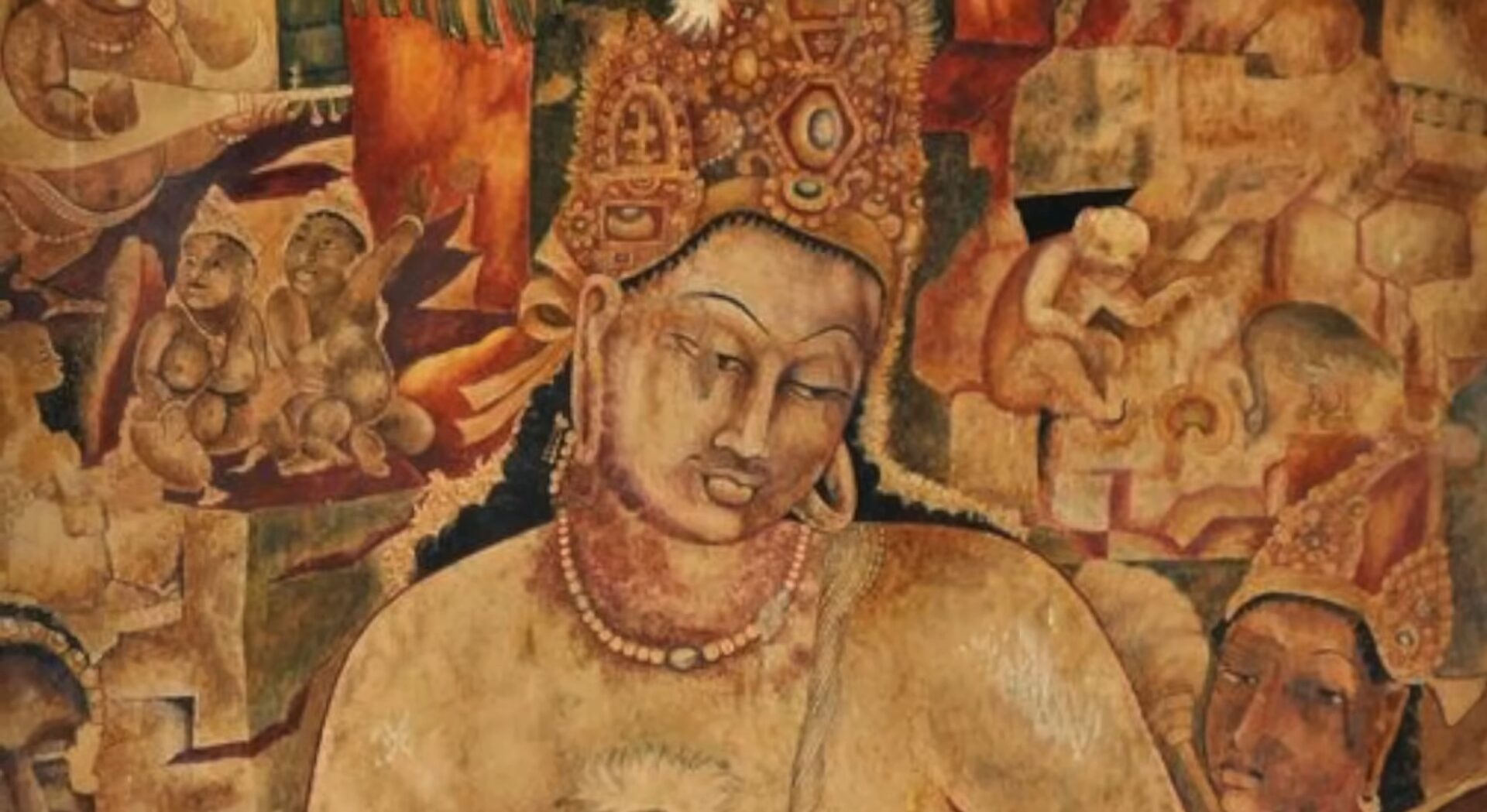
Gorgeous paintings of Bodhisattvas like Padmapani and Vajrapani, with soft eyes and delicate jewellery still visible after so many centuries. The main Buddha statue is in dharmachakra mudra, the teaching posture.
Cave 2
More narrative murals and fine detailing on the ceiling. Look out for scenes that feel like slices of everyday life — women getting ready, royal courts, children, and nagas. This is where Ajanta Caves history really comes alive in front of your eyes.
Cave 4
The largest vihara, or monastery, at Ajanta. High pillars, a huge hall, and a shrine chamber with Buddha. It is easy to imagine this space as a hostel and classroom combined for monks.
Caves 9 and 10 (Chaitya caves)
These prayer halls belong to the older Hinayana phase. With stupas at the centre, long naves, and side aisles, they give strong temple vibes even though everything is carved from a single rock.
Caves 16 and 17
Cave 16 contains important narrative panels, while Cave 17 is often called the picture gallery of Ajanta. You will find scenes from the Jataka tales showing earlier lives of Buddha — kings sacrificing themselves, elephants, monkeys, queens, and palace life.
Cave 26
The famous 24-foot long reclining Buddha in Mahaparinirvana. Below his feet, mourners express grief, while above him celestial beings almost celebrate his liberation. The entire cave feels like a masterclass in storytelling through stone.
Ajanta viewpoint experience
After covering the main caves, walk up to the viewpoint across the valley. From here, you can see the entire curve of Ajanta at once, especially beautiful during the monsoon when waterfalls appear along the cliffs. This is the iconic frame you have probably seen in documentaries.
Day 2 – Ellora Caves: Three Religions, One Cliff
Ellora is closer to Aurangabad — about 30–35 km away — and has 34 main caves spread over ~2 km: Buddhist (1–12), Hindu (13–29) and Jain (30–34).Yatra.com+1
If Ajanta is all about painting and serenity, Ellora is about scale and engineering madness.
Key spots for your Ellora Caves Kailasa Temple visit & more:
1. Kailasa Temple – Cave 16
If you see only one thing at Ellora, make it Kailasa.
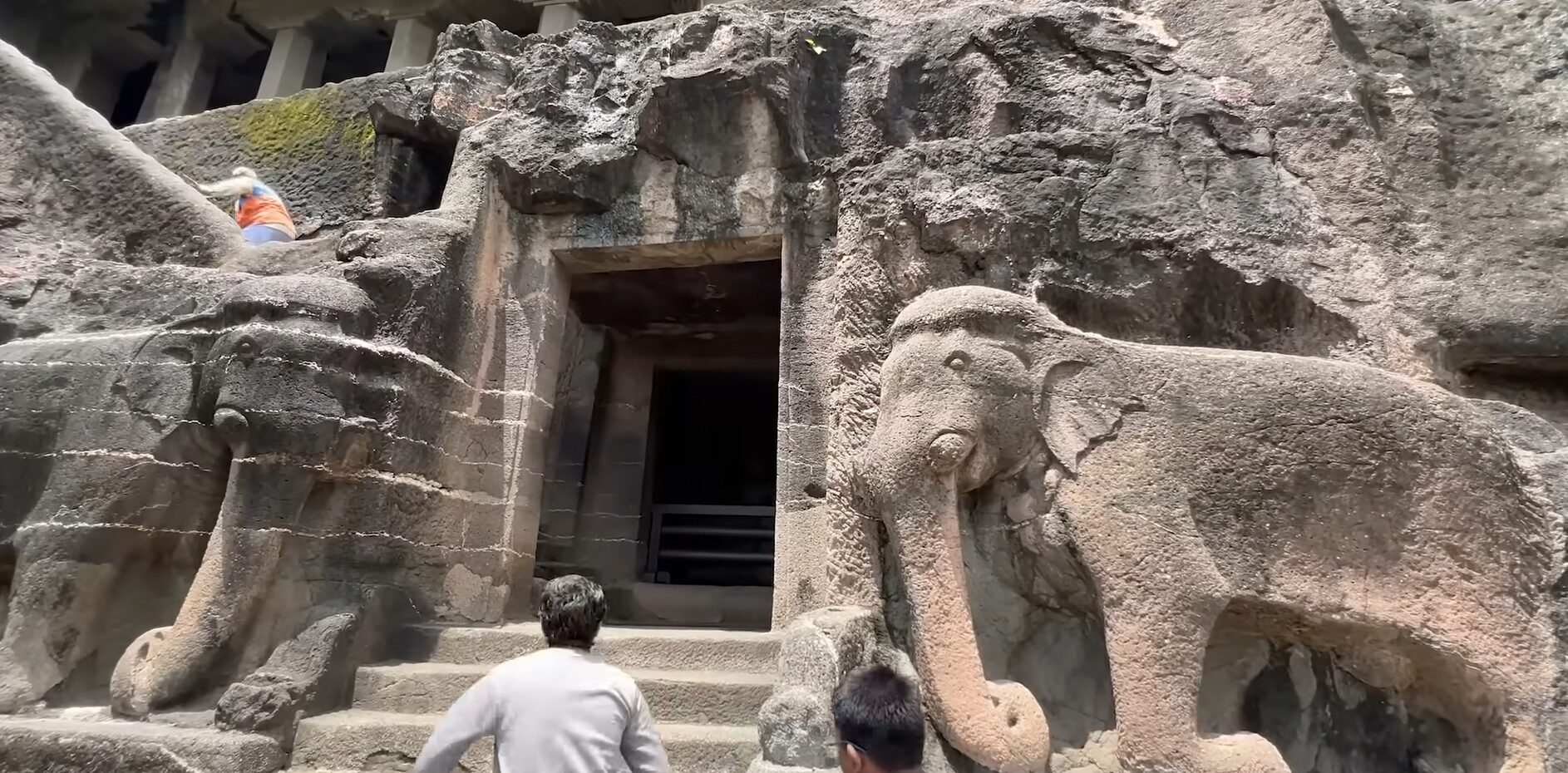
It’s a multi-storey temple complex carved top-down from a single rock, dedicated to Lord Shiva. Archaeologists estimate that over 200,000 tonnes of rock were removed to create this freestanding temple, courtyard, elephants, pillars, and shrines.
Walk slowly here:
- Stand at the upper gallery and look down into the courtyard — it really feels like someone picked up a free-standing temple and dropped it inside a giant rock quarry.
- Notice scenes from the Ramayana and Mahabharata carved along the walls: Ravana shaking Kailash, Shiva as Nataraja, Vishnu’s avatars, divine weddings, battles — the whole mythological cinema is here in stone.
2. Early Hindu Caves – 14, 15, 21, 29
- Cave 14 (Ravan ki Khai) – Fierce goddess Durga slaying Mahishasura, Shiva–Parvati scenes, intricate panels.
- Cave 15 (Dashavatara) – Dedicated to Vishnu, with depictions of his ten avatars and other deities.
- Cave 29 (Dumar Lena) – Often compared with Elephanta Caves; powerful images of Shiva as Nataraja, and other dynamic sculptures.
3. Buddhist Caves – 10, 11, 12
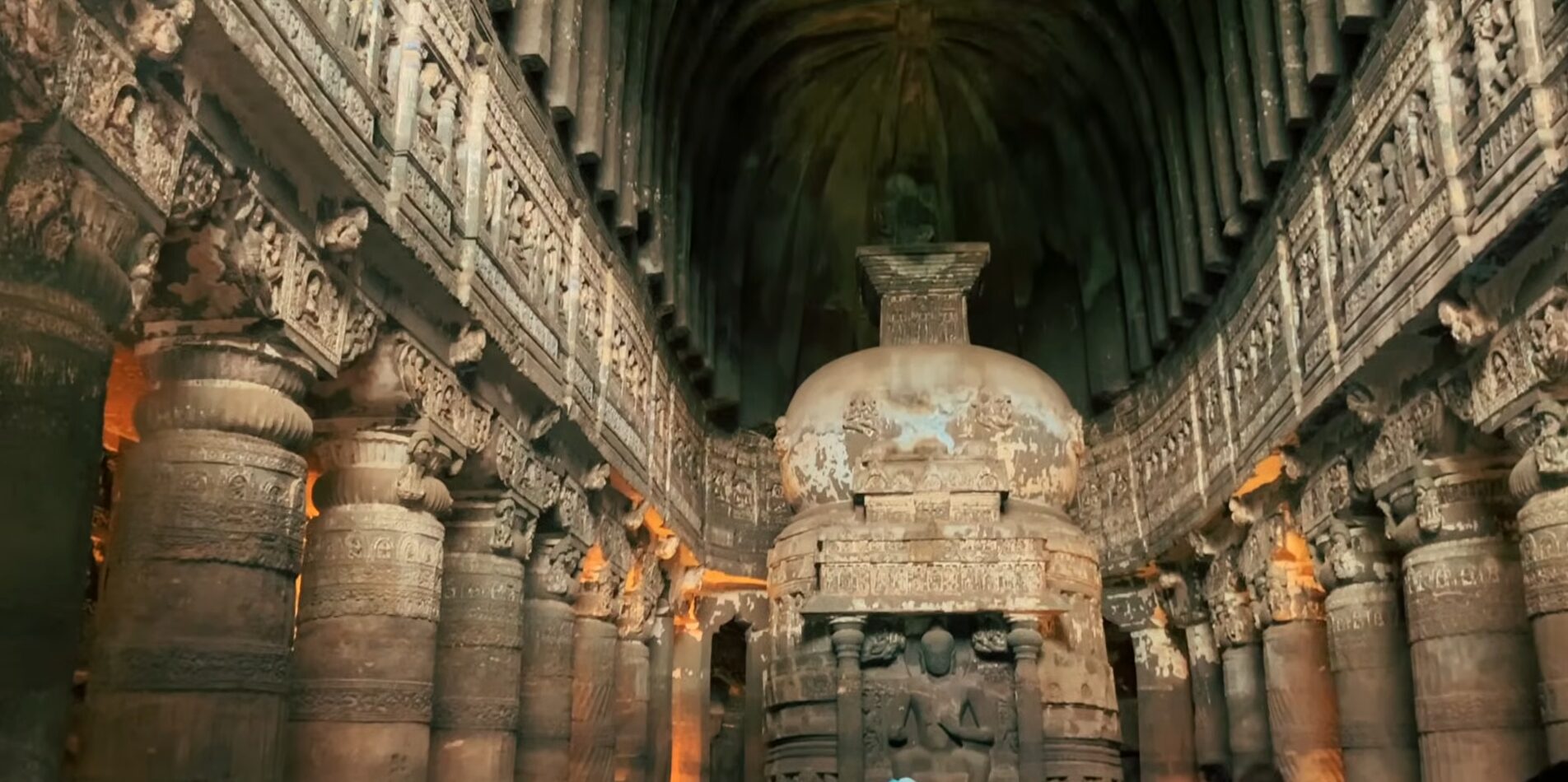
- Cave 10 (Vishvakarma / Carpenter’s Cave) – The only chaitya at Ellora. High arched ceiling, stupa with Buddha image; the stone ribs of the ceiling look like wooden beams.
- Caves 11 & 12 (Do Tal & Teen Tal) – Multi-storey monasteries with prayer halls and cells. Imagine these as vertical hostel blocks for monks.
4. Jain Caves – 32, 33, 34
The Jain section is quieter and beautifully detailed:
- Cave 32 (Indra Sabha) – Two-storey complex with pillars, shrines of Mahavira and other Tirthankaras, lotuses and celestial motifs carved everywhere.
- Cave 33 & 34 – Smaller but rich in spiritual imagery, showing the Jain emphasis on simplicity and inner focus.


Best Time to Visit Ajanta & Ellora
Maharashtra gets properly hot, so timing your Ajanta and Ellora Caves travel guide trip makes a big difference. Come in the right season and the whole experience feels calmer and more enjoyable.
Winter (November – February) – Most Comfortable
- Pleasant days, cool evenings.
- Best for exploring caves without sweating through your t-shirt.
- Landscape is drier but walking 700+ steps at Ajanta feels manageable.
Monsoon & Just After (July – October) – For Green Lovers
- Lush green hills, waterfalls around Ajanta and behind Ellora.
- Caves feel dramatic with clouds and mist.
- Paths and steps can be slippery; carry good footwear and a rain jacket.
Summer (March – June) – Only If You Must
- Heat can cross 35–40°C.
- You’ll get tired faster; caves feel stuffy in the afternoon.
For crowds: weekends and long holidays are busy; if you can, plan weekdays.
Closed days & timings (important):
- Ajanta Caves – Open 9:00 AM to 5:00 PM, closed on Monday.ASI+1
- Ellora Caves – Open around 8:00 AM to 5:30 PM, closed on Tuesday.Travelogy India+1
Plan your Ajanta Ellora itinerary from Aurangabad so that you don’t land up at locked gates.
How to Reach (Bus, Train, Distance)
Most travellers use Aurangabad (Chhatrapati Sambhajinagar) as the base.
By Air
- Nearest airport: Aurangabad (Chhatrapati Sambhajinagar).
- Direct or connecting flights from Mumbai, Delhi, Pune, etc.
By Train
- Aurangabad Railway Station connects with major Maharashtra and North Indian cities.
- From the station you can take an auto/taxi to your hotel and then plan day trips.
Distances
- Aurangabad → Ajanta Caves
- Distance: ~95–105 km by road, takes about 2–3 hours depending on traffic and road condition.
- Aurangabad → Ellora Caves
- Distance: ~30–35 km, about 45–60 minutes by car.
Local Transport Options
For Ajanta
- Government bus from Aurangabad towards Jalgaon / Ajanta – cheapest option but slower.
- Shared taxi – local operators often club solo travellers; cost-effective and faster.
- Private cab – comfortable if you’re a group or family, and easiest for a combined Ajanta & other nearby sights.
From the Ajanta parking area, you must take the official shuttle bus to the cave entrance (a few km away). Tickets are cheap; just follow the signboards.
For Ellora
- Frequent state buses run from Aurangabad to Ellora / Verul.
- Autos and cabs are easily available for a half-day or full-day trip that also covers Grishneshwar Temple and Daulatabad Fort.
Budget Breakdown (Per Person, 2 Days from Aurangabad)
Here’s a rough, backpacker-friendly budget estimate for your trip in this Ajanta and Ellora Caves travel guide, assuming you’re sharing some costs:
1. Stay (2 nights in Aurangabad)
- Budget hostel / guesthouse: ₹700–1,200 per night
- Approx for 2 nights: ₹1,400–2,400
2. Transport
- Aurangabad ↔ Ajanta (shared cab) – ₹700–900 per person (return, depending on season & bargaining)
- Aurangabad ↔ Ellora (shared cab / bus + auto) – ₹300–600 per person (return)
- Local autos in the city – ₹200–400 total
Total transport ballpark: ₹1,200–1,800
3. Entry Tickets (current standard rates)
- Ajanta Caves – ₹40 for Indians
- Ellora Caves – ₹40 for Indians
- Camera / video charges may be separate; check current boards on-site.
4. Food
- Simple breakfast + lunch + dinner near caves / city: ₹400–700 per day
- For 2 days: ₹800–1,400
5. Guide / Audio Guide (optional but recommended)
- Shared government-approved guide: ₹200–500 per person (if you join others)
- Private guide costs more but you can split within a group.
6. Shopping & Extras
- Souvenirs, snacks, water, tips, etc: ₹300–600
Total approx budget for 2 days:
👉 Low budget: ₹4,000–₹4,500
👉 Normal / Comfortable: ₹5,500–₹7,000
(Excluding your train/flight to Aurangabad.)
If Ajanta & Ellora fit your budget travel goals, you can also explore another amazing budget-friendly destination — Matheran, one of Maharashtra’s cutest hill stations.
Check this Matheran travel guide for itinerary & stay tips.
Safety & Local Tips
This is where theory ends and real life starts. A few small things can make your trip calmer and safer:
1. Footwear & Walking
- Ajanta involves a lot of steps and walking; wear good, closed footwear.
- Inside most caves you’ll remove shoes at the entrance, so choose something easy to slip on/off.
2. Light & Photography
- Many caves are dim to protect ancient paintings. Carry a small torch/headlamp for details.
- Flash photography is generally not allowed near paintings — respect the rules and guards.
3. Heat, Dehydration & Food
- Carry a refillable water bottle; drink regularly, especially in summer.
- Eat light before climbing — poha / upma > heavy oily meals.
- There are basic eateries near the sites; for better food options, eat in Aurangabad city.
4. Guides & Scams
- Prefer official, licensed guides or audio guides where available; some unlicensed people may approach you with half information and random stories.The Times of India+1
- Fix the price clearly before starting the tour.
- If something feels off or you’re uncomfortable, walk away or move towards a crowd/ASI staff counter.
5. Road Conditions
- The road to Ajanta has had pothole and construction issues recently, which can slow you down and make the ride bumpy.The Times of India
- Start early in the morning, keep buffer time, and avoid cutting it too close to closing hours.
6. Respect the Sites
- These aren’t just tourist spots; they’re living heritage and, for many, spiritual places.
- Don’t touch the paintings or carvings, don’t carve your name, and keep your voice low inside halls.
- Use dustbins; monkeys love plastic and food waste, so don’t feed them.
7. Solo / Female Travellers
- Ajanta & Ellora are popular and usually crowded during the day — that’s good for safety.
- Dress comfortably but modestly, as you’ll be entering religious spaces.
- If you’re hiring a cab for the day, share the cab details & number with someone back home.
Suggested 2-Day Ajanta Ellora Itinerary from Aurangabad
Arrival day : Arrive in Aurangabad by evening, check into hostel/hotel, early dinner, sleep.
Day 1 – Ajanta
- 7:00 am – Leave Aurangabad (the earlier, the cooler the weather).
- 9:30 am – Reach Ajanta parking → shuttle bus → cave entrance.
- 10:00 am–2:00 pm – Explore key caves (1,2,4,9,10,16,17,26) with a guide.
- 2:00–3:00 pm – Late lunch at MTDC / nearby canteen.
- 3:00–4:00 pm – Walk up to the viewpoint for the panoramic horseshoe view.
- 4:30 pm – Start back for Aurangabad.
Day 2 – Ellora + Nearby Spots
- 8:00 am – Leave Aurangabad for Ellora.
- 9:00 am–1:00 pm – Explore Ellora: Kailasa (16) first, then 10, 14, 15, 29, 32.
- 1:00–2:00 pm – Lunch near Ellora.
- 2:00–4:00 pm – Visit Grishneshwar Temple and maybe Daulatabad Fort if you have energy.
- Evening – Back to Aurangabad, dinner, chill.
Planning more trips in Maharashtra? Also read our budget solo trip guide to Rishikesh for planning style and money-saving ideas.
For external links, you can add small resource boxes like:
- “Check latest timings & ticket prices on the official ASI Ajanta page (search: ASI Ajanta Caves).”ASI
- “For Ellora details, see the ASI / Maharashtra tourism pages before you go.
What This Journey Leaves Behind
History always feels far away — until you stand inside it. Ajanta and Ellora are not just caves or old stones… they are stories, art, faith, and human effort that refused to fade even after 2,000 years.
This Ajanta and Ellora Caves travel guide is meant to help you enjoy them like a real traveller — not rushed, not confused, but curious and amazed. Walk slowly, notice the tiny carvings, the colours on the walls, the silence that still lives there. Imagine the monks painting under oil lamps, the sculptors hitting stone for decades just to create one statue of meaning.
Take your time. Sit down on a rock. Look at the valley. Let the past sit next to you for a moment.
And when you return to noisy Aurangabad, you’ll carry a little piece of this ancient world with you — something you cannot buy, only feel.
If this Ajanta and Ellora Caves travel guide helped you, you’ll also love discovering the greenery of Matheran — here’s a simple guide to plan that trip too.

